


Yes — Dallas, Texas is a strong place to raise a family, especially when "Dallas" really means the northern Dallas–Fort Worth suburbs, which is where most relocating families actually land. Families choose DFW for top-rated school districts, no state income tax, more house for the money than most coastal metros, and communities built around parks, sports, and everyday family life. The tradeoffs are real too: hot summers, more driving, tolls, and higher property taxes than many buyers expect. I'm a mom of four who has helped hundreds of families make this exact decision, so let me walk you through it the way I'd tell a friend — the good and the not-so-good.
Quick answer: Yes — Dallas–Fort Worth is one of the best U.S. metros for raising a family, thanks to a dense cluster of A and A+ rated school districts in its northern suburbs, no state income tax, and family-built communities like Frisco, Allen, and Flower Mound — though you'll trade for hot summers and a car-dependent lifestyle.
That's the short version. But "Dallas" means very different things depending on where in the metro you land, so the real answer is in the details. Below is the honest, parent-to-parent breakdown — what makes DFW genuinely great for families, the tradeoffs nobody on a glossy relocation site will tell you, and exactly where to start your search.
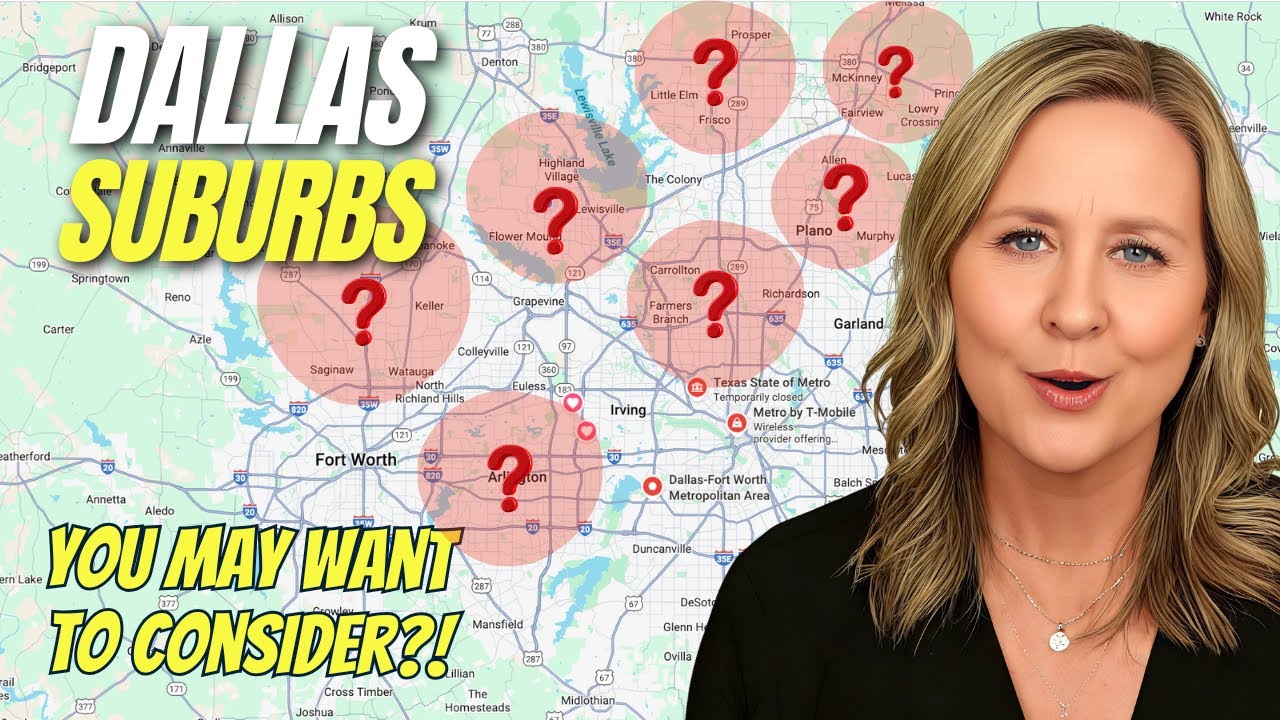
Watch: Dallas Suburbs to Consider — my full walkthrough of where families actually choose to live across DFW, and how to narrow it down.
The Short Answer — and the Catch
Families move to DFW for a stack of reasons that reinforce each other: strong schools, a deep and diversified job market, no state income tax, new housing being built constantly, and a long outdoor-friendly season. The Dallas–Fort Worth–Arlington metro carried about 4.3 million nonfarm jobs as of early 2026 (U.S. Bureau of Labor Statistics), so a job loss in one industry rarely means uprooting your kids — there's usually another opportunity across town.
Here's the catch most listicles skip: the "Dallas" that's so good for families usually isn't the city of Dallas proper. It's the ring of northern suburbs — places like living in Frisco, Texas, Allen, Plano, McKinney, Flower Mound, and Southlake — where the top school districts, newer neighborhoods, and family amenities concentrate. Understanding that distinction is the single most useful thing I can tell you, because it changes how you search.
Schools: The Real Reason Families Choose DFW
If I had to name the one factor that drives nine out of ten of my family relocations, it's schools. And this is where DFW genuinely shines — not because every district is great (they aren't), but because of how many top-rated districts sit clustered within a 40-minute radius north of Dallas.
The suburban independent school districts most families target — Frisco ISD, Allen ISD, Plano ISD, Lewisville ISD (which serves Flower Mound), and Carroll ISD (Southlake) — earn A and A+ grades from Niche and strong accountability ratings from the Texas Education Agency. Frisco ISD carries an A+ Niche grade; Allen ISD is also A+. Few metros in the country offer this much high-rated district choice in one compact corridor.
That concentration matters because it gives you options at different price points. You don't have to buy the single most expensive house in the metro to get into a top district — you can compare several A/A+ districts and find the one that fits your budget and commute. I walk through all of them in my guide to the best DFW school districts for families, and you can compare them side by side on the DFW school districts hub.
Don't shop for a house first and a school district second. In DFW, the district lines are the map. Pick the two or three districts that fit your family, then look at homes only inside those boundaries — it'll save you months of second-guessing.
Cost of Living & What Your Money Buys
DFW lands near the U.S. average for overall cost of living, but for families coming from California, the Northeast, or other high-cost metros, the housing math is what makes people exhale. The big lever is taxes: Texas has no state income tax at all. For a household coming from California (where the marginal rate tops 9.3%), New York (roughly 6.85% plus a New York City surcharge if applicable), or Illinois (a 4.95% flat rate), that's real money back in your budget every single paycheck.
On top of that, the Texas homestead exemption removes $140,000 from your home's school-taxable value (Texas Tax Code §11.13(b)) once you file on your primary residence — a meaningful offset to the property taxes I'll be honest about later. On a $500K home, that drops the school-district taxable value to $360,000.
And what does a family home actually cost? It depends entirely on which suburb you choose. Here's the current snapshot across the suburbs families ask about most:
| Suburb | Median Home Price | School District (Niche) | Property Tax (est.) | Drive to Downtown Dallas |
|---|---|---|---|---|
| McKinney | $502K | A | ~1.9% | ~40 min |
| Allen | $513K | A+ | ~1.9% | ~35 min |
| Plano | $528K | A | ~1.8% | ~30 min |
| Flower Mound | $630K | A | ~1.9% | ~35 min |
| Frisco | $673K | A+ | ~1.8% | ~35 min |
Home prices: NTREIS 12-month rolling single-family medians, updated live. Property tax rates are blended estimates for illustrative comparison. Actual effective rates vary by ISD, county, city, and any Municipal Utility District (MUD) or Public Improvement District (PID) overlays — which can add 0.25%–0.75% in newer master-planned communities. Verify with the county appraisal district before closing.
For a family coming from the Bay Area or Long Island, a $500K–$700K budget in DFW buys a four-bedroom home with a yard in a top-rated district — the kind of house that would cost two to three times as much in those markets. I break the full math down in Is moving from California to Dallas worth it?, which is required reading if you're coming from a high-cost state.
Family Lifestyle: Sports, Parks & Community
Schools and budgets get families in the door, but lifestyle is what makes them stay. North DFW is built around kids in a way that surprises people who've never lived here. Youth sports are practically a regional institution — Frisco alone has multiple municipal sports complexes, and competitive leagues for soccer, baseball, lacrosse, and volleyball fill nearly every season. If your kid plays a sport, there's a place to play it.
The parks and trails are the part newcomers underestimate. Flower Mound is laced with trails and sits next to Lake Grapevine, with a tight-knit, master-planned-community feel that families from the Pacific Northwest tend to gravitate toward. Allen centers civic life around the Allen Event Center and its extensive park system. Southlake offers a walkable Town Square that functions as the community's living room. And Frisco layers in big-ticket amenities — The Star (the Dallas Cowboys' headquarters), an indoor water park, and a constant calendar of family events.
The thing I tell every family touring DFW for the first time: the community shows up on a random Tuesday — at the ballfields, the library, the splash pad. That's the part you can't see in listing photos, and it's the part that actually raises your kids.
Add in the metro-wide attractions — the Perot Museum of Nature and Science, the Dallas Zoo, the Dallas Arboretum, and the Fort Worth museum and stockyards district — and you have years' worth of weekend plans. Outside the peak summer stretch, much of the year — especially fall and spring — supports outdoor family life.
The Honest Tradeoffs
No place is perfect, and I'd rather you hear the downsides from me now than discover them after you've unpacked. Three tradeoffs come up again and again, and every family I work with adjusts to them — but you should budget for them honestly.
The summer heat is real. From June through September, DFW runs hot — frequent stretches of 100°F-plus afternoons. Air conditioning runs almost continuously, and a 2,500–3,500 sq ft home can cost $250–$400 a month to cool in peak summer versus $80–$150 in winter. Families adapt by shifting outdoor time to mornings and evenings, but the heat is a genuine adjustment if you're coming from a cooler climate.
You will need a car — probably two. DFW is spread out and car-dependent. Public transit exists (DART rail serves parts of Dallas, Plano, and Richardson) but it isn't built for suburban family life. Most northern-suburb commutes to Dallas use tollways — the Dallas North Tollway, the President George Bush Turnpike, and SH 121 — and regular commuters budget roughly $80–$160 a month in tolls.
Property taxes are higher than you're used to. Texas has no income tax, but it makes up part of that with property taxes — effective rates in DFW commonly land in the high-1% to high-2% range depending on the district and any MUD or PID overlays in newer communities. The homestead exemption helps, and for many families relocating from high-income-tax states the net is still a win, but it's a line item you have to plan for. One more North Texas reality to insure against: this is hail country, and homeowner's policies here carry 1%–2% wind/hail deductibles. I cover more of the surprises newcomers run into in 6 mistakes people make moving to Dallas.
None of these are dealbreakers — they're tradeoffs. The families who are happiest here are the ones who ran the numbers honestly before they moved: tolls, summer electric bills, hail insurance, and the real property-tax rate for their specific district. Go in clear-eyed and DFW delivers. Go in assuming "no income tax" means "cheap," and you'll be surprised.
Where to Start Your Suburb Search
If you've read this far, you've probably realized the question isn't really "Is Dallas good for families?" — it's "Which DFW suburb is right for my family?" That's the question I help families answer every week, and it's why I built out full guides for every one of the Dallas–Fort Worth family suburbs. Here's how the most popular ones sort out at a glance:
Frisco
- Median home: $673K
- School district: Frisco ISD · A+
- Best for: amenities, sports, modern master-planned living
Allen
- Median home: $513K
- School district: Allen ISD · A+
- Best for: value, tight community, single-district town feel
Flower Mound
- Median home: $630K
- School district: Lewisville ISD · A
- Best for: trails, lake life, established community
McKinney
- Median home: $502K
- School district: McKinney ISD · A
- Best for: historic charm, affordability, arts & culture
Whether you should pick Frisco, Allen, Flower Mound, McKinney, Plano, or Southlake comes down to your budget, your commute, and the lifestyle your family wants. Use the decision helper below to sanity-check whether DFW is your fit, then dig into the individual guides.
- Top-rated public schools are non-negotiable for you
- You want more house and yard for your money than coastal metros offer
- No state income tax meaningfully helps your household budget
- Your kids are into sports, and you want deep youth leagues nearby
- You're comfortable with a car-dependent, suburban lifestyle
- You can plan for summer heat, tolls, and a higher property-tax line
And to be honest about the other side: DFW may not be your best fit if walkable, transit-first city living is a must-have, if you need a cooler climate year-round, or if a short, low-traffic commute matters more to you than schools and house size. Those are real preferences, and I'd rather help you weigh them now than after a cross-country move. For most school-age families, though, the suburban tradeoffs are well worth it.
Frequently Asked Questions
Is Dallas safe for families?
Safety is a top priority for every family, and the right answer is the one you verify yourself. Rather than rank areas, I point families to independent tools — NeighborhoodScout, your local police department's public crime map, and City-Data — so you can review the data for any specific neighborhood and make your own call.
Which part of Dallas is best for families?
Most relocating families settle in the northern suburbs, where the top-rated school districts and newer family neighborhoods cluster. Frisco, Allen, Plano, McKinney, Flower Mound, and Southlake are the names that come up most. The best fit depends on your budget, commute, and the school district you want — not a single ranking.
Is the Dallas school district good?
It depends which district you mean. Dallas ISD is large and varied, with strong magnet and choice programs alongside campuses that struggle. The suburban districts most families choose — Frisco ISD, Allen ISD, Plano ISD, Lewisville ISD, and Carroll ISD — earn A and A+ grades from Niche and strong TEA accountability ratings.
What is the cost of living in Dallas for a family?
DFW sits near the U.S. average overall, with a major advantage: Texas has no state income tax, and the homestead exemption removes $140,000 from your home's school-taxable value. The offset is higher property taxes plus hidden costs — tollways, hail insurance, and summer electricity — so budget those in.
Is Dallas a good place to raise kids?
For many families, yes. The northern suburbs are built around kids — deep youth sports leagues, large park and trail systems, libraries, and master-planned communities with pools and playgrounds. Add strong schools and a steady job market, and DFW offers a stable, activity-rich environment to raise a family.
Is Dallas family-friendly?
Yes, Dallas is family-friendly — though most families gravitate to the suburbs. Beyond schools and sports, you get the Perot Museum, the Dallas Zoo and Arboretum, and the Fort Worth museum district, plus suburb-level amenities like Frisco's sports complexes and Flower Mound's trail network. A long warm-weather season makes outdoor weekends easy.
How much does a family home cost in the DFW suburbs?
It varies widely by suburb. As of the latest NTREIS data, the median single-family home runs roughly $502K in McKinney, $513K in Allen, $528K in Plano, $630K in Flower Mound, and $673K in Frisco, with Southlake well above $1M. Newer master-planned communities skew higher.
The Bottom Line for Your Family
So — is Dallas, Texas good for families? Yes, genuinely, especially if you focus your search on the northern suburbs where the schools, the housing, and the family infrastructure all line up. It's not paradise; the heat, the driving, and the property taxes are real. But for families who want strong schools, room to grow, and a community that shows up for its kids, DFW is one of the easiest places in the country to say yes to. The only real work left is choosing the right suburb — and that's exactly what I'm here for.

Free Download
The DFW Family Relocation Guide
Schools, suburbs, property taxes, and the buying process — everything your family needs to make the right move.
Get the Free Guide →Kristen Carpentier, TREC License #760457 · eXp Realty, 15950 Dallas Pkwy #400, Dallas, TX 75248 · Licensed in Texas only · Consumer Protection Notice · Information About Brokerage Services