


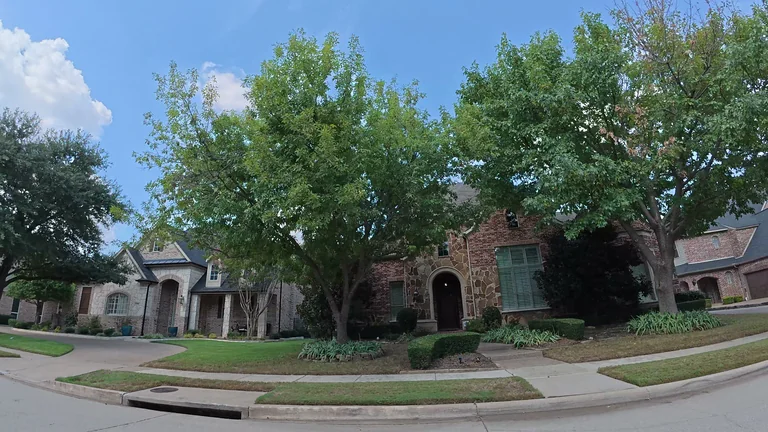
Our family moved from Arizona to Flower Mound, Texas, more than 14 years ago. We are glad we made that move. Looking back, we would keep the choice and start a few checks earlier: how an address works on a normal weekday, what the whole month costs, and how each child will settle in.

Watch: Moving to Texas With Kids? What We’d Do Differently, our full conversation about the checks behind a family move.
Our experience is in Dallas-Fort Worth, and Kristen’s real-estate service area is DFW. The same planning questions can help elsewhere in Texas, but school assignments, utility choices, local taxes, and routes need to be checked with the organizations serving each address.
A suburb name is a starting point. The exact home address can change a school assignment, a daily drive, utility options, taxes, insurance quotes, and how much of the week your family spends in the car. Before you fall in love with a listing, compare the daily life around that address.
Check the exact address before choosing a home
Two homes with the same city name can be connected to different school districts or campuses. Boundaries can also change. That is why we would ask the district to confirm the assignment for each address before making a housing decision. A city label, a real-estate listing, or a third-party map is not a final answer.
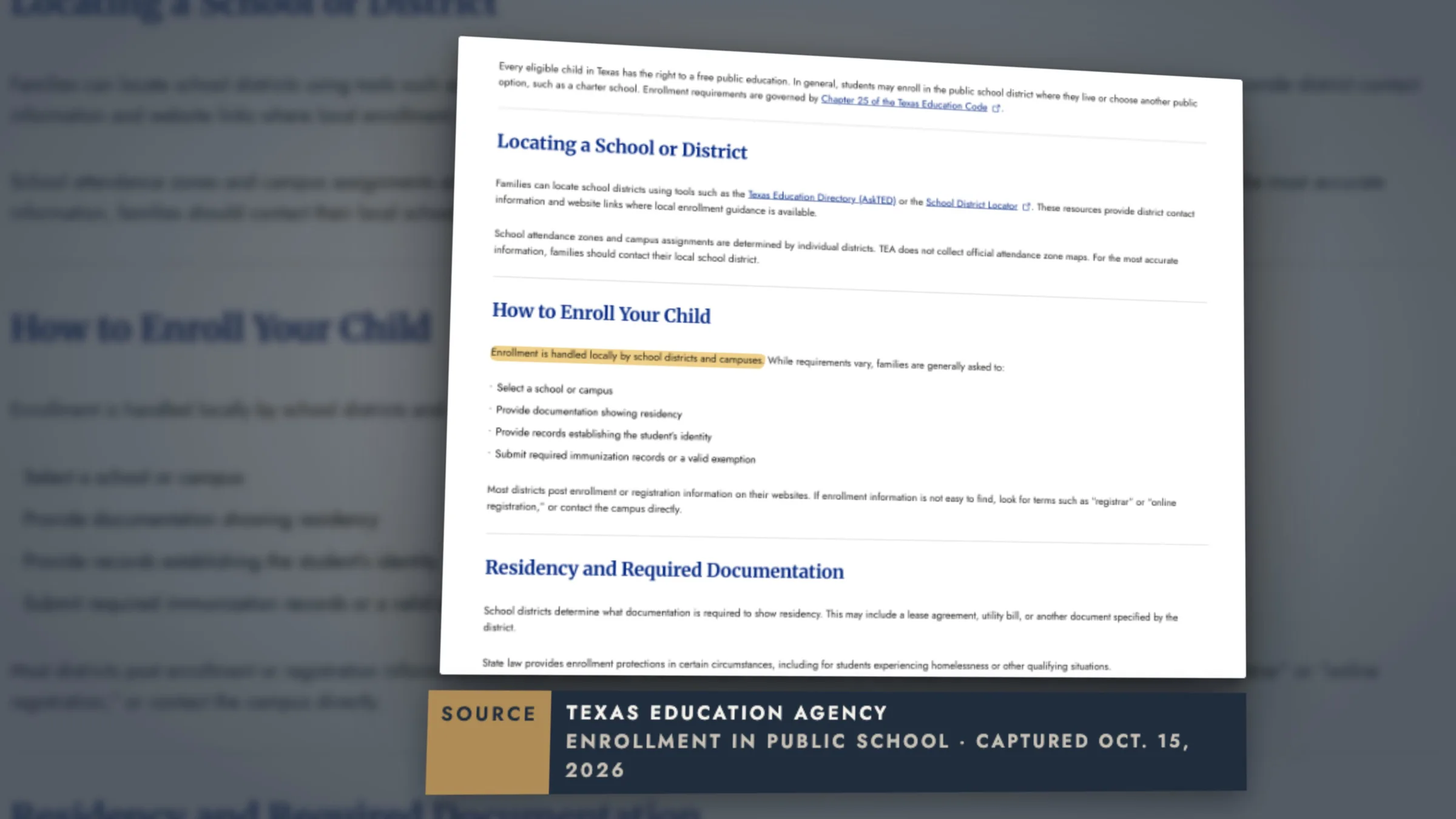
The Texas Education Agency’s School District Locator can help identify a district. The locator FAQ explains that TEA does not collect local attendance zones, so families should contact the district directly about a specific property. Ask the district which campus serves the address now, what enrollment steps apply, and whether any program or grade-level details could affect your plan. Get the answer from the district, then save the name and date of the person who confirmed it. Our DFW school district guide can help you get oriented, but the local district should confirm the assignment for a specific property.
This same exact-address habit helps with daily life. Check where the household would buy groceries, reach a doctor or pharmacy, get to childcare, and join regular activities. Flower Mound and nearby parts of north DFW have many different neighborhood layouts; a park or service shown in a town overview is not necessarily close to a particular home.
Try the real weekday before you choose
A weekend visit can make an area feel easy and quiet. A school morning can feel very different. If you can, visit a potential neighborhood on an ordinary weekday. Drive the routes you expect to use at the time you would use them: home to school, childcare, work, and the regular errands that matter to your family.
Do not just look at a map’s mileage. Check where the route crosses busy roads, whether you would need toll roads, where a child would be picked up, and how the routine works if one parent has to make the trip alone. If you are considering more than one house, use the same set of stops and times for each. That turns “this one feels closer” into a comparison you can explain.

For DFW routes that may use toll roads, the North Texas Tollway Authority provides a toll calculator. Route cost is only one piece: consider whether you would use that road often, whether there is a realistic alternative, and how the commute changes at the times your family actually travels.
Price the whole month for each address
When we think back to planning a move, we would put every predictable cost next to the home payment from the start. A larger home or a shorter drive may be worthwhile for your family, but it is easier to decide when each address is priced using the same list.
On a phone, swipe the table to see every column.
| Monthly line | What to check for each address | Who can confirm it |
|---|---|---|
| Home payment | Compare principal, interest, and any applicable mortgage insurance using the same down payment, loan assumptions, and rate estimate. Exclude property tax and homeowners insurance here; list them in their separate rows below, even if your lender collects them through escrow. | Your lender |
| Property tax | Check the property’s tax history and current taxing units; estimates can change. | County appraisal district and local taxing units |
| Home insurance | Request a quote for the specific house, roof, coverage, and deductible. | Licensed insurance agent |
| Utilities | Ask for recent bills or realistic estimates; note seasonal electricity use. | Provider, seller, or landlord |
| Transportation | Estimate fuel, tolls, parking, and added drive time for routine trips. | Your route test; NTTA calculator |
| Childcare and activities | Confirm current openings, hours, fees, and travel from the home. | Provider or activity organization |
Texas property taxes are set and collected locally. The Texas Comptroller’s property-tax guide explains how local taxing units fit into the system. A tax estimate attached to a listing is useful for a first look, but compare the actual property and ask how an exemption or a future appraisal could affect your own numbers. Also ask the seller or agent to identify any parcel-specific district taxes or public-improvement assessments, such as a MUD or PID, then confirm the current details with the entity that bills them. Do not assume every home in one suburb has the same charges.
Insurance is also a house-by-house question. The Texas Department of Insurance shopping guide explains coverage and deductibles. Ask for a quote using the actual property details and compare what is covered, not only the premium. Include wind and hail deductibles and any coverage limits in the comparison so a lower premium does not hide a different level of protection.
For electricity, check which provider options apply to the property. The Public Utility Commission of Texas (PUCT) plan comparison and Power to Choose help consumers compare plans in areas where retail electric choice is available. Water, trash, and other services depend on local providers. For childcare, the state’s Texas Child Care Connection is a search tool; contact providers directly about current openings and schedule.
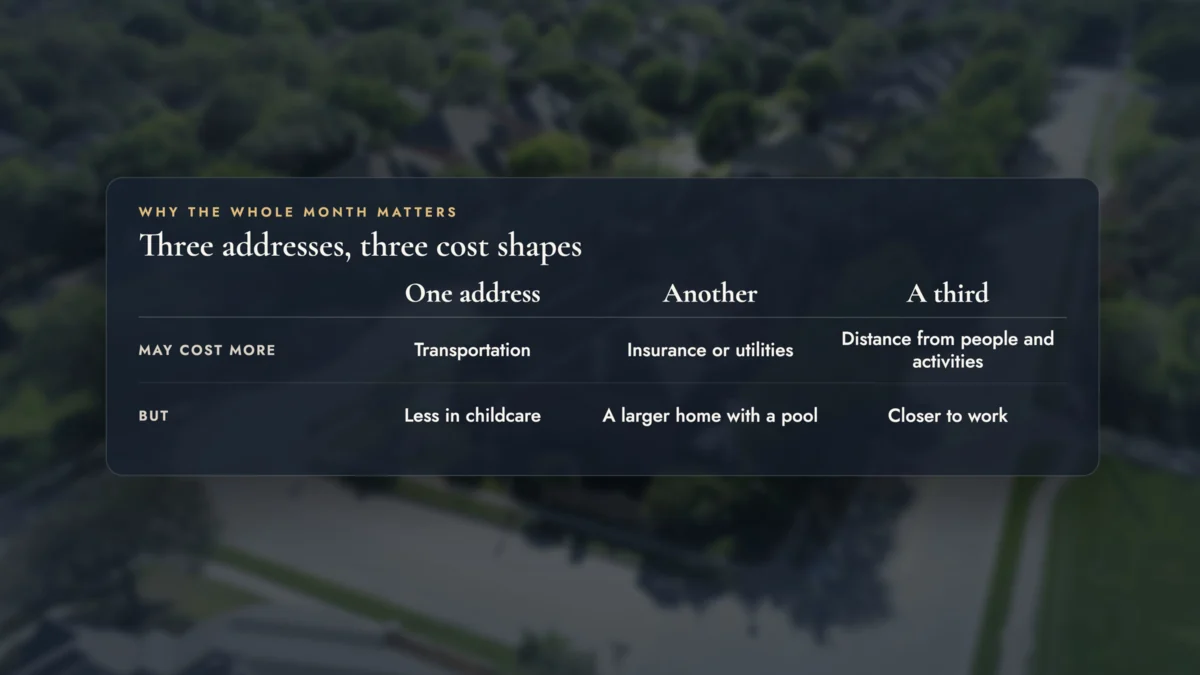
For a broader first pass on choosing an area, see our earlier guide, Moving to DFW With Kids: How to Choose Your Suburb. That article helps narrow a long list of suburbs. This one picks up once you are comparing actual addresses and daily routines.
Plan the first month as carefully as moving day
The first few weeks include a lot of small jobs that compete for the same time. We would make the plan before the move and put school, childcare, transportation, and basic services in a clear order. The goal is to help the children and adults settle into a workable routine, not to complete every possible task on day one. If a family relies on prescriptions, medical supplies, or a regular care provider, include those handoffs in the plan and keep needed items easy to reach during the trip.
- Before choosing a home: Confirm the school district and enrollment contact for the exact address. Ask childcare providers about openings, hours, paperwork, and when a place can be held.
- Before the truck arrives: Confirm start dates for electricity, water, trash, and internet with the providers serving that property. Keep account numbers and setup confirmations where you can find them.
- Before the first school or work week: Gather the records the district requests, map the route, and make a backup pickup plan. TEA’s public-school enrollment guide is a useful starting point, but the district supplies the current campus and document instructions.
- During the first month: Use TxDMV’s New to Texas page for vehicle registration and title questions. Driver licenses and state IDs are handled by the Texas Department of Public Safety. Check each agency’s current steps, documents, and deadlines early. Also identify nearby healthcare and everyday services, then adjust the route after you experience it in real life.
If your family is considering Flower Mound, our Flower Mound guide can help you get familiar with the town. Use it alongside direct checks on a particular home, because a town overview cannot tell you the school assignment, utility provider, route, or insurance price for an address.
Help each child settle in at their own pace
In the video, I explain that our children did not all react to the move the same way. Some were excited about a new adventure; others needed more time to adjust. Our move worked out well, and I would still make more room in the plan for the people, places, and routines the children were leaving behind.
Before the move, I would show them pictures of the new home and a few ordinary destinations they might use. Ask what they want to know and offer choices that fit their age. A younger child might choose which familiar bedtime items travel with them. An older child might help look at an activity schedule or choose a time to call a friend. Keep the choices within what you can actually offer, and confirm any campus, team, or program before promising it.
After arrival, restore a few predictable things quickly: the bedtime routine, a favorite breakfast, or a regular call with a friend or grandparent. Leave room for old friendships while offering manageable chances to meet new people through school, a team, a library program, or a community event. One child may want to join in quickly; another may prefer a quieter start. I would leave some open time in the first weeks so the schedule can respond to the child.
We moved in June, and parks and community pools became ordinary places where our children could meet other kids. That is one reason I would spend more of a scouting visit in the places a family may use every week: a grocery store, library, recreation center, park, or a familiar lunch stop. Check current hours, program availability, and the route from the home. A good visit gives you something concrete to show the children and helps you picture an ordinary afternoon.
If you are planning the Arizona side of the move too, our Phoenix-to-Dallas family relocation guide provides a broader state-to-state planning companion.
A simple checklist to carry to each showing
- What school district and campus serve this exact address today? Who at the district confirmed it, and when?
- Can we drive the school, childcare, work, and regular errand routes on a normal weekday?
- What are the estimated monthly costs for housing, taxes, insurance, utilities, tolls, childcare, and activities?
- Which costs are firm quotes, and which need a second check?
- What must be ready for the first school day and first week at home?
Our family’s move from Arizona to Flower Mound worked out well. Looking back, we would spend more time earlier on the exact address, the ordinary Tuesday, and the complete monthly picture. Those checks do not decide where every family should live. They help your family choose with fewer surprises and a clearer picture of the life you are moving into.
Common questions about moving to Texas with children
Does a home’s city name tell me which school my child will attend?
No. Attendance boundaries are based on the property address and can change. TEA does not collect local attendance zones, so ask the district to confirm the current assignment. Also ask which enrollment steps and documents apply, then record when the district confirms the address. A city name alone cannot tell you the campus.
How do I compare the cost of homes in different DFW suburbs?
Use one monthly worksheet for every home. Include housing, local property taxes, an insurance quote for that home, utilities, transportation and tolls, childcare, and activities. Label each number as a quote or an estimate and note when you checked it. Compare the same household needs across both addresses.
Is Flower Mound the right choice for every family moving to Texas?
No one suburb is right for everyone. Flower Mound was the right move for our family, but the fit depends on each household’s budget, routines, work, and priorities. Compare specific addresses against your own needs, confirm the school assignment, and test the trips your household would make each week.
What should we arrange before moving day?
Contact the school district and childcare providers about documents, timing, and availability. Confirm when utilities and internet can start and how transportation will work in the first week. Keep needed prescriptions and important contacts easy to reach during the move, and make a backup pickup plan before the first school day.

Keep your move questions in one place
As you work through school contacts, address checks, and the first month, get our relocation guide for more DFW planning context.
Get the Family Relocation Guide →Kristen Carpentier, TREC License #760457 · eXp Realty, 15950 Dallas Pkwy #400, Dallas, TX 75248 · Licensed in Texas only · Consumer Protection Notice · Information About Brokerage Services · Equal Housing Opportunity.